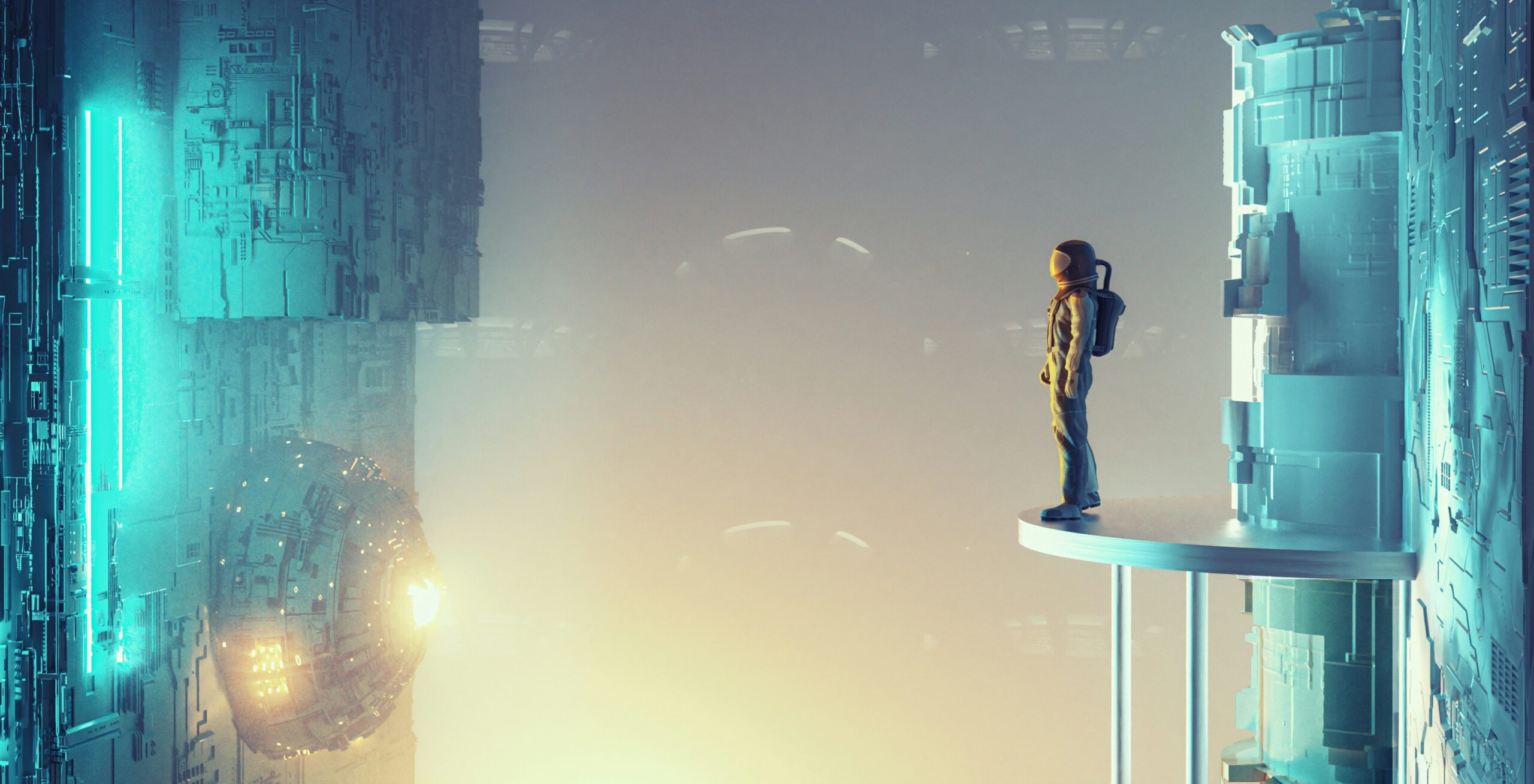
Science fiction has always invited readers to look beyond the limits of everyday life. Through stories about distant planets, intelligent machines, time travel, and unknown civilizations, the genre turns impossible ideas into exciting possibilities. A journey through science fiction is more than an escape into imaginary worlds. It is also a way to explore human nature, technological change, and questions about where society may be heading. For generations, science fiction stories have encouraged people to wonder what might exist beyond the world they already know.
The Early Roots of Science Fiction
Science fiction may feel like a modern genre, but its roots stretch far into the past. People have told stories about strange lands, journeys to the heavens, and extraordinary inventions for centuries. However, the genre began taking a more recognizable form during the nineteenth century.
Mary Shelley’s “Frankenstein,” published in 1818, is often connected with the early development of modern science fiction. The story explores what could happen when scientific ambition moves beyond accepted boundaries. Instead of simply presenting a frightening creature, Shelley raised deeper questions about responsibility, discovery, and the consequences of human choices. Later writers expanded the possibilities of the genre. Jules Verne imagined extraordinary journeys beneath the sea, around the world, and into unexplored places. H. G. Wells wrote about time travel, alien invasion, invisibility, and biological experimentation. Their stories combined scientific ideas with adventure while encouraging readers to think about the future. As science advanced in the real world, writers gained even more material for their imagined worlds.
Looking Toward the Stars
Space became one of the most important settings in science fiction during the twentieth century. Scientists were learning more about the universe, while rockets were moving from imagination toward reality. Writers responded by creating civilizations spread across planets, solar systems, and galaxies. Space stories offered almost unlimited creative freedom. Authors could invent planets with unusual environments, alien species with unfamiliar cultures, and technologies that allowed people to cross enormous distances. However, these stories were rarely only about space. A distant planet could become a setting for exploring conflict, cooperation, prejudice, survival, or environmental problems. An encounter with aliens could raise questions about how humans react to cultures they do not understand. In this way, fictional worlds often became reflections of real human concerns. The vastness of space also introduced a powerful question: Are humans alone? Science has not yet provided a final answer. As a result, writers continue imagining possibilities ranging from friendly first contact to civilizations so different from humanity that communication becomes extremely difficult.
Technology Changes the Story
Technology has always played an important role in the genre. Yet the most memorable stories usually do more than introduce impressive machines. They ask what those machines could mean for people.
Robots are a good example. Early fictional robots were sometimes presented as dangerous mechanical servants. Over time, writers developed more complex ideas. A robot might become a companion, worker, soldier, caregiver, or independent intelligence. Artificial intelligence has made these questions even more relevant. Modern science fiction often explores what could happen if machines become highly capable at learning, reasoning, creating, or making decisions. The interesting question is not simply whether intelligent machines can exist. Writers also ask how humans might treat them and how technology could change relationships, employment, privacy, power, and personal identity. As real technology develops, futuristic fiction can begin to feel surprisingly close to everyday life.
Traveling Through Time
Few ideas capture the imagination as easily as time travel. It allows characters to visit the distant past, witness possible futures, or attempt to change events that have already happened. Yet time travel quickly creates difficult questions. What happens if someone changes a major event in the past? Could the traveler erase the future they originally came from? Would history create a different timeline, or would events somehow correct themselves?
Writers have developed many answers. Some stories use a single timeline where every action has consequences. Others introduce parallel universes where different choices create separate realities. Still others suggest that certain historical events cannot be changed. These different approaches give authors opportunities to explore regret, responsibility, destiny, and choice. A character who can revisit the past may discover that knowing what happened does not make changing it simple. That emotional element helps explain why time-travel stories remain popular.
Dystopias and Warnings About Tomorrow
Not every imagined future is hopeful. Some of the genre’s most influential stories present dystopian societies where technology, governments, corporations, environmental disasters, or social systems have created frightening conditions. These fictional futures often work as warnings rather than predictions. Authors may take a real concern and push it to an extreme. Surveillance might become constant observation. Environmental damage could make parts of Earth difficult to inhabit. Social inequality might divide people into completely separate classes. Because the setting is fictional, writers can examine uncomfortable issues from a different perspective. Dystopian stories also tend to focus on individuals. Readers experience enormous social systems through characters trying to survive, resist, escape, or understand them. That personal viewpoint makes large ideas easier to connect with emotionally.
Science Fiction and Human Identity
One of the deepest themes in the genre is surprisingly simple: What does it mean to be human? Clones, androids, aliens, cyborgs, and digital minds all challenge traditional ideas about identity. If a machine can think and feel, should it have rights? If memories can be copied, does the copy become the same person? If humans replace parts of their bodies with technology, at what point does their identity change? There are no easy answers. That uncertainty is exactly what makes these stories interesting. Fiction allows readers to explore complicated questions without requiring immediate solutions. Stories about alien civilizations can serve a similar purpose. By creating beings with different customs and values, authors can make familiar human behavior appear strange. Readers may begin questioning assumptions that normally seem natural. Therefore, imaginary worlds can sometimes help people examine the real world more carefully.
From Books to Movies and Games
Science fiction eventually moved far beyond novels and short stories. Radio programs, television, movies, comics, and video games introduced futuristic storytelling to enormous audiences. Film brought spaceships, robots, alien landscapes, and futuristic cities to life visually. Television gave creators more time to develop complicated fictional societies and long-running characters. Meanwhile, video games added another dimension by allowing players to participate in imagined worlds. Instead of simply watching explorers visit another planet, players can become the explorers themselves. Modern storytelling also mixes formats. A fictional universe may begin with a novel and later expand into films, television series, games, comics, and online communities. Despite these changes, the heart of science fiction remains storytelling. Spectacular visual effects may attract attention, but audiences usually remember compelling characters, meaningful conflicts, and powerful ideas.
When Fiction Inspires Reality
The relationship between imagination and technology can move in both directions. Scientific discoveries inspire writers, but imaginative stories can also encourage scientists, engineers, designers, and inventors to consider new possibilities.
A fictional device does not automatically become a real invention. Many imagined technologies may remain impossible because of physical or practical limitations. Still, stories can encourage people to ask whether something could be built. That question matters. Before engineers solve a technical problem, someone often needs to imagine the goal. Fiction provides a space where ideas can exist without immediately worrying about cost, engineering limitations, or current technology. Later, researchers can examine which parts of those ideas might actually be possible.
Why the Genre Continues to Evolve
Science fiction changes because society changes. Earlier generations worried about industrialization, nuclear conflict, and space exploration. Those themes still appear, but today’s stories also examine artificial intelligence, climate change, genetic engineering, virtual worlds, automation, biotechnology, and digital surveillance.
Future writers will encounter new questions that are difficult to imagine today. That flexibility gives futuristic storytelling unusual staying power. The genre does not depend on one setting, technology, or type of character. It can contain romance, mystery, horror, comedy, adventure, philosophy, or political drama while still exploring speculative ideas. Most importantly, it gives people permission to ask “what if?”
The Journey Is Far From Over
A journey through science fiction can begin on Earth and end thousands of years in the future, somewhere beyond the known galaxy. Along the way, readers may encounter intelligent machines, alien cultures, altered humans, collapsing societies, and technologies that challenge everything familiar. Yet behind these science fiction worlds are questions that remain deeply connected to ordinary human life. The genre continues to thrive because the future remains unknown. Every scientific discovery creates new possibilities, while every social change raises new questions. Science fiction gives writers and readers a place to explore those possibilities before they become reality. As long as people remain curious about tomorrow, there will always be another imaginary world waiting to be discovered.